What is MindSave?
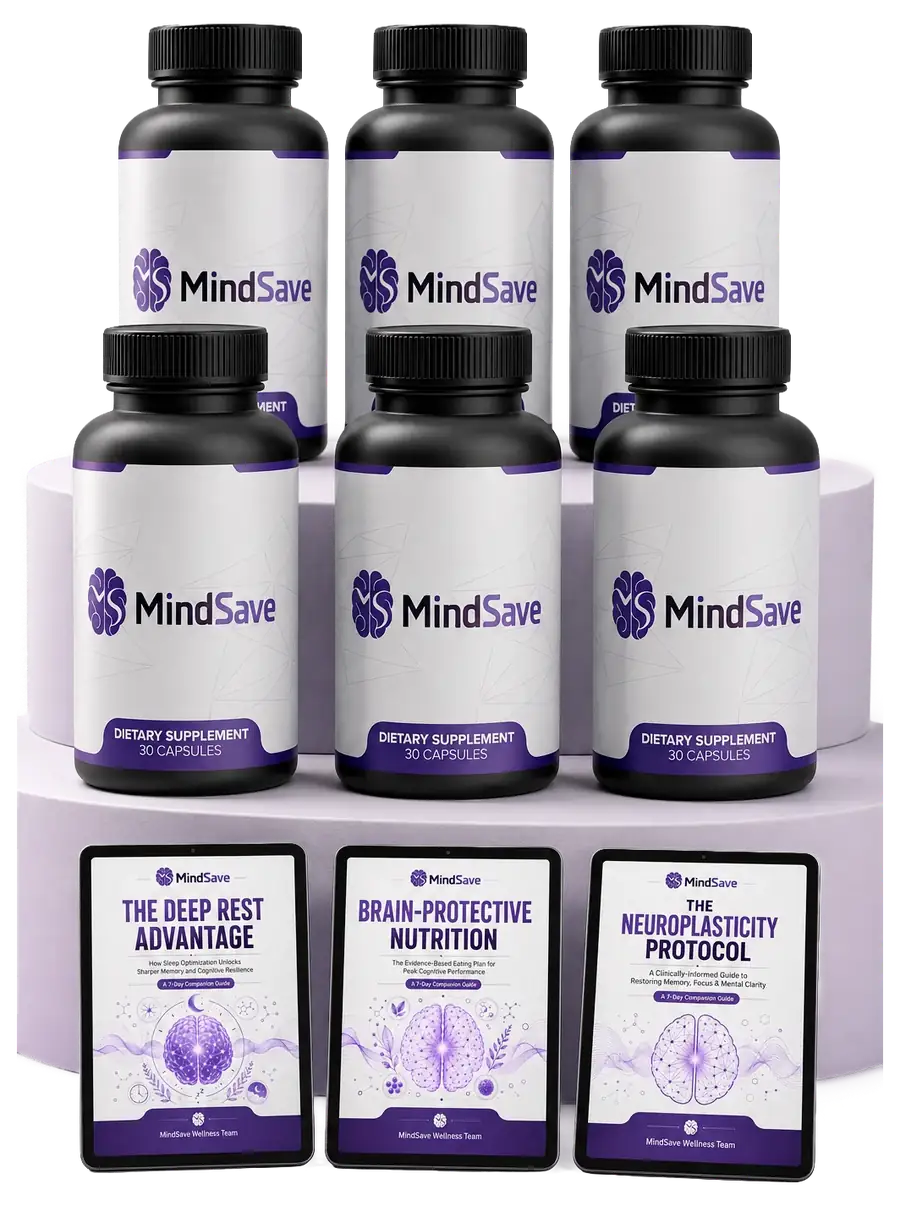
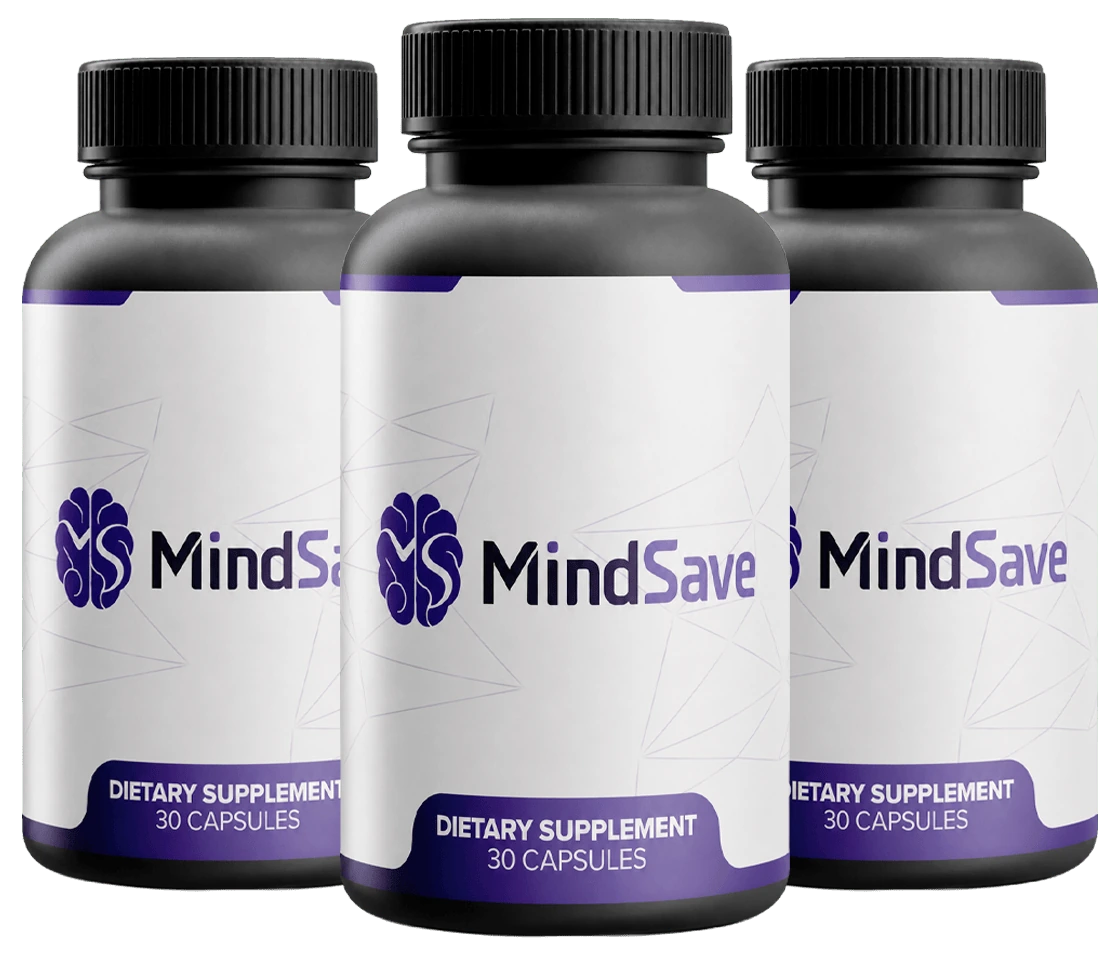
MindSave is a capsule that you swallow once a day. The seller calls it a dietary supplement. Three phrases appear on the label: sharper memory, clearer focus and everyday cognitive performance. They come straight from the label and the sales page, and this website adds no fourth one.
People often search for it with other words, such as a nootropic, a brain supplement or a cognitive support capsule. The label does not use the word nootropic. It describes a daily capsule, and that is the plainest way to say it.
The product has one shape only. There is no gummy, no tablet, no drops and no powder. If you saw a MindSave gummy or a MindSave drop somewhere, it is not the product this website describes.
A bottle has 30 capsules, enough for 30 days at one a day. You can only buy MindSave in packs of 2, 3 or 6 bottles, so the smallest order is a 60-day supply. A single bottle is not sold.
What does the MindSave label say it supports?
The label says the capsule supports sharper memory, clearer focus and everyday cognitive performance. These are called structure and function statements. A supplement is allowed to use that kind of wording. It is not allowed to say it treats, cures or prevents a disease. See the FDA page on structure and function claims for the rule.
The label also carries the usual FDA note. The agency has not evaluated these statements, and the product is not meant to diagnose, treat, cure or prevent a disease. Read that note as part of the product, not as small print.
The seller prints a caution block on the bottle too. It says not to exceed the recommended dose, and that anyone with a known medical condition should talk to a physician first. It adds two more rules: keep the bottle away from children, and leave it alone if the safety seal is broken.
Who sells MindSave, and is that the same as who makes it?
No. The seller is Mindsaves, which calls itself the USA Authorized MindSave Retailer. It runs this website from New York. It is a retail desk. It is not the manufacturer and it is not the formulator.
That matters if you are asking who makes MindSave. This website cannot answer that fully. The name of the company that makes the capsules is not published here, and nothing on these pages should be read as naming one. What the seller does publish is a seal that says Foreign and Domestic Ingredients. The capsules are made in the United States, and the ingredients are bought at home and abroad. Which ingredient comes from where is not stated.
The seller also shows a Registered Facility seal and a GMP seal. A facility registration is a listing with the FDA. It does not report an inspection and it does not approve the product. For the GMP mark, the body that certified it and the date of the audit are not published.
Mindsaves says on its own pages that it earns money on orders placed through the website. That is worth knowing before you read any page here, this one included.
What is inside a MindSave capsule?
Niacin (as niacinamide) comes first. After it come vitamin B6, GABA and L-tyrosine, then bacopa monnieri, alpha GPC, phosphatidylserine and huperzine A. No amount is printed for any of them on the sales page. The amounts are printed on the Supplement Facts panel on the bottle itself, because the labeling rule requires them there.
There is one more thing to know. In the seller’s artwork there is also a flat label image showing a different formula. That second formula centres on a blend with caffeine (from green coffee), theacrine and theobromine. This website carries the eight-name list, but it cannot tell you which one matches the bottle shipping this month. The panel on the bottle you receive settles it. If you avoid stimulants, read that panel before the first capsule.
| Item | What is published |
|---|---|
| Form | Capsule |
| Capsules per bottle | 30 |
| Serving | A single capsule daily, swallowed with 6 to 8 oz of water |
| Ingredient names | 8, all published |
| Amount of each ingredient | Not on the sales page; printed on the bottle panel |
| Packs | 2, 3 or 6 bottles; no single bottle |
| Guarantee | 60 days from purchase |
| Lot reference | MIN-26/MI-7343 |
| Who makes it | Not published on this website |
Who is MindSave for, and who should skip it?
MindSave is for healthy adults aged 18 and over. It is not for anyone under 18. It is not for anyone who is pregnant or nursing. Anyone with a known medical condition should talk to a doctor first, and so should anyone who takes prescription medicine.
Two names on the list are vitamins with published ceilings: 100 mg a day for vitamin B6 and 35 mg a day for supplemental niacin. The B6 limit counts food and supplements together. If a B-complex or a multivitamin is already part of your day, lay both panels next to each other when the bottle comes.
Huperzine A is also worth a word. It works in the opposite direction to several medicine groups: antihistamines, sleep aids, antipsychotics, muscle relaxants and urinary incontinence medicines. The same holds for prescribed cholinesterase inhibitors. If you take one of those, bring a specific question to your doctor or pharmacist before you start.
What has not been shown about MindSave?
No published clinical trial has ever tested the finished product. The research this website cites looks at single ingredients, at doses the studies chose. None of it studied MindSave, and because the capsule’s amounts are not published on the sales page, no study’s dose can be attached to it.
The National Institute on Aging takes a cautious line on the whole category: for now it recommends no vitamin or supplement to prevent Alzheimer’s disease or other cognitive decline. You can read it on the NIA page on cognitive health. It does not treat memory loss, dementia, mild cognitive impairment or attention disorders.
So the honest summary is small. It is a daily capsule with eight named ingredients, a 60-day money-back guarantee, and a label that makes limited claims.
Frequently asked questions
What is MindSave?
A dietary supplement in capsule form, taken once a day. It aims at sharper memory, clearer focus and everyday cognitive performance, and a bottle of 30 capsules lasts 30 days. It is not a drug and it is not FDA approved.
Who makes MindSave?
The name of the maker is not published on this website. Mindsaves, the USA Authorized MindSave Retailer in New York, sells it and is not the manufacturer or the formulator. The capsules are made in the United States, using ingredients bought at home and abroad.
Is MindSave a nootropic?
People search for it that way, but the label does not use the word. It is a daily capsule with eight named ingredients. It makes structure and function statements only and does not claim to treat any condition.
Is MindSave a gummy, a drop or a pill?
It is a capsule. It is not a gummy, a tablet, drops or a powder. Swallow one capsule a day with a 6 to 8 oz glass of water, as the sales page says.
Who should not take MindSave?
Anyone under 18, anyone pregnant or nursing, and anyone with a known condition or a prescription who has not asked a doctor first. People who avoid stimulants should read the bottle panel before the first capsule.
Where is MindSave sold?
Only through the checkout on mindsaves.com. The seller supplies no pharmacies, supermarkets or gyms and has no marketplace storefront. Orders are never taken by phone or email.
Our view
MindSave is easy to describe and hard to judge. The description fits in a line: a capsule, once a day, eight names, a 60-day window. The judging is harder, because the amounts are held back until the bottle arrives and the finished product has no published trial behind it.
We think that is the right way to read it. Treat MindSave as a daily habit you can test for yourself, inside a guarantee, and not as a proven fix. Read the bottle panel first. Ask a doctor if you take medicine. And keep your expectations small and your records honest.
What this is and is not. MindSave is a dietary supplement. It is not a drug, it is not FDA approved, and no dietary supplement is. Nothing on this page presents it as a treatment for memory loss, dementia, Alzheimer’s disease, mild cognitive impairment or any other condition. If your memory or thinking is changing in a way that worries you, talk to a doctor. Ask a doctor or pharmacist before use if you take any prescription medicine.
Last updated October 16, 2026
Sources named on this page
- National Institute on Aging, National Institutes of Health. Cognitive Health and Older Adults. https://www.nia.nih.gov/health/brain-health/cognitive-health-and-older-adults
- U.S. Food and Drug Administration. Structure/Function Claims. https://www.fda.gov/food/nutrition-food-labeling-and-critical-foods/structurefunction-claims
- Electronic Code of Federal Regulations. 21 CFR 101.36 - Nutrition labeling of dietary supplements. https://www.ecfr.gov/current/title-21/chapter-I/subchapter-B/part-101/subpart-C/section-101.36
- NIH Office of Dietary Supplements. Niacin: Fact Sheet for Health Professionals. https://ods.od.nih.gov/factsheets/Niacin-HealthProfessional/
- NIH Office of Dietary Supplements. Vitamin B6: Fact Sheet for Health Professionals. https://ods.od.nih.gov/factsheets/VitaminB6-HealthProfessional/