MindSave Official Website Label Desk MindSave 30-Day Routine Guide: Build a Practical Plan
MindSave 30-Day Routine Guide: Build a Practical Plan
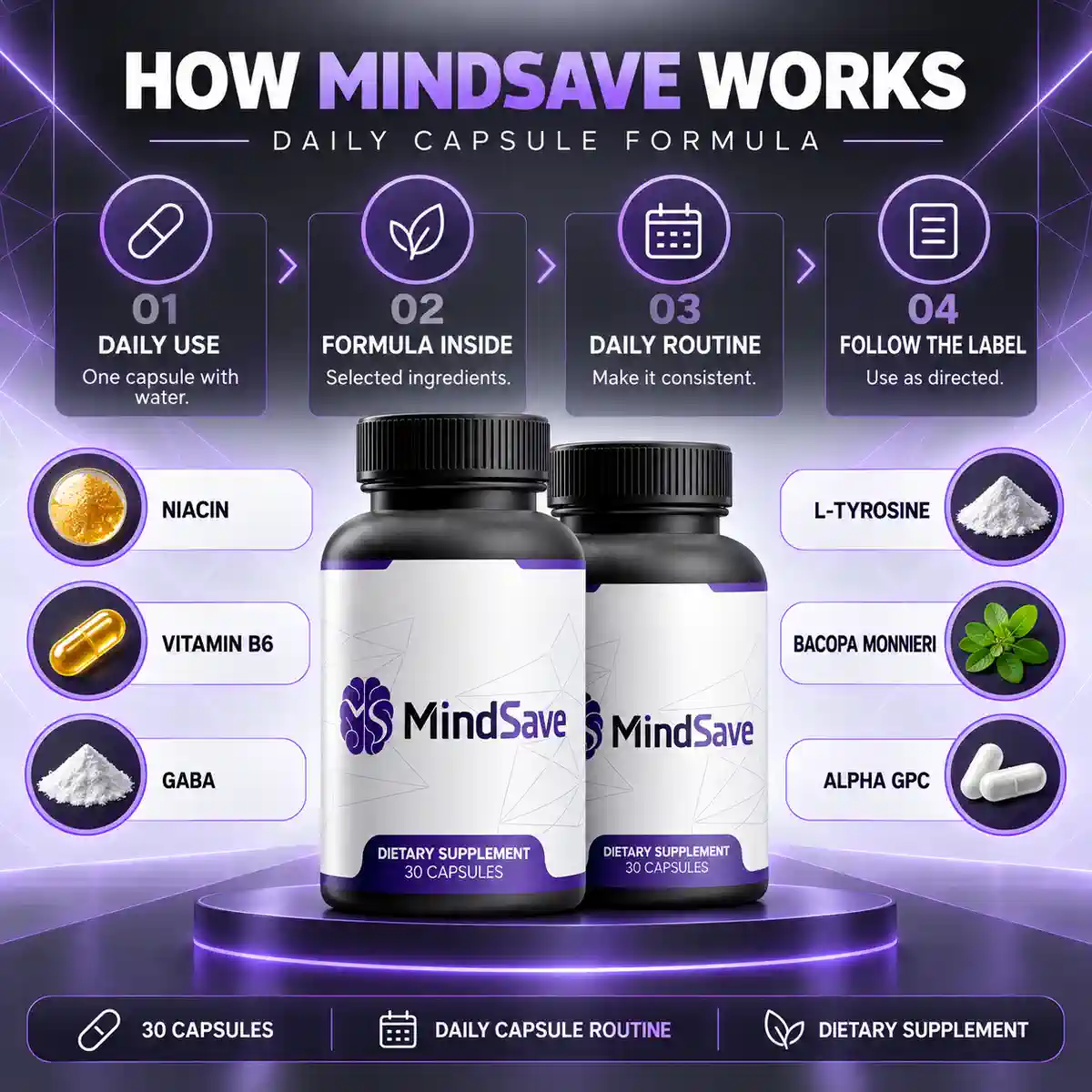
A 30-capsule MindSave bottle is described as one month at one capsule daily. This guide turns that serving direction into a simple, user-led planning routine without promising a cognitive result or replacing professional care.
- The published routine is one capsule daily with 6 to 8 oz of water. Use the label and official website as the source for serving directions.
- A monthly calendar supports consistency, not a promised effect. A 30-day supply tells you how long a bottle lasts when used as directed. It does not set an outcome timetable.
- A medicine review is part of a sensible plan. Keep prescriptions, over-the-counter medicines and other supplements visible for a pharmacist or clinician.
- Reorder only after reviewing current facts and terms. The site lists two-, three- and six-bottle options plus a 60-day money-back window. Confirm the live page before checkout.
1. Use the official MindSave serving direction as the anchor
MindSave is sold as a capsule. Its published direction is one capsule daily with 6 to 8 oz of water, and a bottle contains 30 capsules. That gives a useful starting point for planning: one bottle maps to 30 days only when the capsule is taken as directed. A blog does not improve on the label, so the label and current official website remain the source to check first.
A routine works best when it uses a cue that already exists. That might be a morning glass of water, a breakfast plate, a calendar alert or a visible place in a cabinet. The cue should be easy to repeat, and it should not involve changing a prescription schedule or combining products in a way a clinician has not reviewed.
If a day is missed, do not invent a catch-up dose from a blog. Return to the product directions or ask the order desk about the product label if you need clarification. The goal is a calm routine, not a test of willpower and not a reason to double a serving.
Store the bottle according to its label and keep it away from children. If the product received does not match the name, form or capsule count you expected, pause before using it and use the order information to ask a purchase question. A familiar-looking bottle is not enough if an order appears wrong.
2. Build a calendar that works for your life
Put a start date in a calendar and count 30 planned servings forward. That gives a practical reminder of when a bottle would be expected to finish. It is also useful for household budgeting: a two-bottle order represents about 60 calendar days at the printed routine, three bottles about 90 days and six bottles about 180 days.
Keep the calendar plain. A tick mark for a taken serving, a missed-serving note and a space for a question are enough. You do not need to score memory, diagnose a problem or interpret normal day-to-day variation. Stress, sleep, illness, travel, caffeine, workload and other changes can make self-observation messy, which is another reason a calendar is not a clinical assessment.
If you want to discuss a concern with a clinician, a dated note can be useful background. Write down the product name, one-capsule direction, other products used and the question you actually have. Do not use an online routine guide to explain a new or troubling symptom. A clinician needs the broader health picture, not only a supplement diary.
Use the calendar to protect your choice. At the end of a bottle, pause and ask whether the routine still fits your priorities, budget and advice from any professional involved. A multi-bottle offer can be convenient, but a person does not owe a supplement a longer trial because they bought a larger pack.
| Point in the month | Reader-first prompt |
|---|---|
| Day 0 | Does the product, capsule count and serving direction match the current official listing? |
| First serving | Have I considered current medicines, other supplements and questions for a professional? |
| Middle of the bottle | Is the routine still practical and are there any questions I should raise rather than guess about? |
| End of the bottle | Do I understand current prices, return terms and whether I want to reorder? |
These prompts support an ordinary household routine. They do not assess cognition or predict a result.
3. Keep the ingredient list and your current routine together
MindSave names eight ingredients: niacin as niacinamide, vitamin B6, GABA, L-tyrosine, bacopa monnieri, alpha GPC, phosphatidylserine and huperzine A. Put that list next to a list of everything else you take. The point is not to search ingredient names until an answer appears. The point is to give a pharmacist or clinician a complete starting document.
The published sales information does not provide milligram amounts for those eight names. That means it cannot be used to total the amount of niacin, vitamin B6 or any other listed ingredient across a person's whole routine. A bottle label, the product information and a professional review are more useful than a guessed number.
The NIH fact sheets for niacin and vitamin B6 provide general intake information, but they do not convert an ingredient name on a branded sales page into an amount. This distinction prevents a common online mistake: borrowing a number from a study or a nutrient reference and presenting it as if it described a specific capsule.
The same restraint applies to benefit claims. The brand describes support for memory, focus and everyday cognitive performance. A supplement ad cannot diagnose memory loss, treat disease or tell a reader why a change in thinking is happening. The National Institute on Aging advises that no vitamin or supplement is recommended for preventing cognitive decline.

4. Make room for a pharmacist or clinician
A good routine has a pause built into it. Before starting a supplement, collect the exact product name, its serving direction and your medicines list. A pharmacist can help identify questions worth taking to a prescriber, and a clinician can assess symptoms or conditions that a product page cannot see.
This is particularly important if there is a new, sudden or concerning change in memory, attention or daily function. Seek professional assessment rather than treating a supplement purchase as a substitute. The same applies if family members are worried, if a person feels unsafe or if a symptom is interfering with ordinary tasks.
Supplements can also matter around procedures, pregnancy, nursing and long-term conditions. The National Center for Complementary and Integrative Health explains that medicines and supplements may interact. The safest online statement is not that every product will cause a problem; it is that personal circumstances determine whether a professional review is needed.
If a professional tells you not to add a product, that is useful information, not a failed routine. A user-centered plan makes space for no purchase, a delay or a different health conversation. A calendar and a bottle should never become pressure to override medical advice.
5. Review the purchase terms before the next bottle
The official MindSave information lists two bottles for $158, three for $207 and six for $294. Those amounts correspond to $79, $69 and $49 per bottle. The lower per-bottle figure on a larger pack is a price fact, not a recommendation. The better choice depends on how much supply, spending and storage a person is comfortable managing.
The pack also states a 60-day money-back guarantee. Read the current return instructions before ordering because terms, shipping and the exact order process can change. Save the confirmation email and product details. A written record is more helpful for a later tracking or refund question than a remembered checkout message.
Do not treat the guarantee as health evidence. A return policy says something about a purchase route; it does not prove a result or make a supplement suitable for everyone. The two decisions remain separate: whether the purchase terms are acceptable and whether taking a supplement is appropriate for you.
At a reorder point, revisit the same four questions: is the product identity clear, is the one-capsule routine practical, have medicines and concerns been considered and do the current price and return terms fit the budget? That is a more respectful decision process than a countdown timer or a generic claim about results.
| Topic | What the current listing should make clear |
|---|---|
| Product | MindSave capsule, 30 capsules per bottle and one daily with water. |
| Ingredients | The eight named ingredients and whether further label information is provided. |
| Packs | The current two-, three- and six-bottle prices. |
| Returns | The published 60-day window and current order-contact instructions. |
Check the live page at the time of purchase. This guide records the pack facts available when it was written.
6. A routine is a tool, not a verdict
A simple plan can make a purchase less confusing: read the product facts, check medicines and health questions with an appropriate professional, use one realistic reminder and review the listing before reordering. None of those steps requires a promise about memory or focus. They are simply ways to keep the shopper in charge.
MindSave may be a product someone chooses to discuss or try within their own circumstances. It is also reasonable to decide that the information is not enough, that a pharmacist should be asked first or that no supplement is wanted. A product guide should make each of those choices easier.
For an order-specific concern, use the contact information supplied with the order. For a health concern, use clinical care. For a question about the product's published facts, return to the official website and compare the current listing with the bottle in hand. Keeping those paths distinct protects both the purchase and the person.
A useful routine also makes it easier to notice when the question has changed. A person may begin by asking how to remember a once-daily capsule, then realize the real issue is sleep, a demanding work period, medication changes, a financial concern or a new problem with memory. The calendar does not answer those questions, but it can make them visible early enough to choose the right next conversation.
That is why the record should stay brief and factual. Dates, the product name, the serving direction, other products and a question for a professional are useful. Statements such as 'this proves the cause' or 'I should continue despite a worrying change' are not. The aim is to preserve information a clinician can use without asking a shopper to become their own diagnostician.
Before any reorder, read the live product page again instead of relying on an old screenshot, a search snippet or a social post. Confirm the exact pack option, bottle count, price, return window and contact route. If the product facts are unclear, stop there. Clear purchase information is a reasonable minimum before someone spends money or changes an established daily routine.
The same approach helps when the answer is simply that no more product is wanted. There is no obligation to finish a supply, buy a larger pack or find a result that justifies a purchase. A person can choose to speak with a pharmacist, focus on sleep or other health habits, or take a concern to a clinician. The value of the checklist is that it leaves the decision with the person rather than with a sales message.
The result is a 30-day plan that stays honest: it tells you what a bottle represents, what the product information says and when to ask for help. It does not manufacture certainty from a routine or an ingredient list.
What this is and is not. MindSave is a dietary supplement. It is not a medicine and nothing here presents it as a treatment for memory loss, dementia, Alzheimer’s disease or mild cognitive impairment. The National Institute on Aging recommends no vitamin or supplement for preventing cognitive decline. If your memory or your thinking is changing in a way that worries you or the people around you, that is a reason to book an assessment, and it is not a reason to start a capsule instead.
Sources cited above
- Electronic Code of Federal Regulations. 21 CFR 101.36 - Nutrition labeling of dietary supplements. https://www.ecfr.gov/current/title-21/chapter-I/subchapter-B/part-101/subpart-C/section-101.36
- NIH Office of Dietary Supplements. Niacin: Fact Sheet for Health Professionals. https://ods.od.nih.gov/factsheets/Niacin-HealthProfessional/
- NIH Office of Dietary Supplements. Vitamin B6: Fact Sheet for Health Professionals. https://ods.od.nih.gov/factsheets/VitaminB6-HealthProfessional/
- National Center for Complementary and Integrative Health, National Institutes of Health. Know the Science: How Medications and Supplements Can Interact. https://www.nccih.nih.gov/health/know-science/how-medications-supplements-interact
- National Institute on Aging, National Institutes of Health. Cognitive Health and Older Adults. https://www.nia.nih.gov/health/brain-health/cognitive-health-and-older-adults
- U.S. Food and Drug Administration. Label Claims for Conventional Foods and Dietary Supplements. https://www.fda.gov/food/nutrition-food-labeling-and-critical-foods/label-claims-conventional-foods-and-dietary-supplements
MindSave questions from this guide
These answers repeat the published product facts and the limits of this guide.
How long is one MindSave bottle intended to last?
The published information says 30 capsules per bottle and one capsule daily, so one bottle is a 30-day supply when used as directed.
Should I take an extra capsule after a missed day?
Do not invent a catch-up dose from this guide. Follow the current product directions or ask an appropriate professional if you need personal advice.
Is MindSave a treatment for memory loss or cognitive decline?
No. MindSave is a dietary supplement, not a medicine. New or worrying changes in memory or thinking should be assessed by a clinician.
How can I compare the MindSave pack options?
The published options are two, three and six bottles. Compare the current total price, number of 30-day bottles, storage, budget and return terms before checkout.
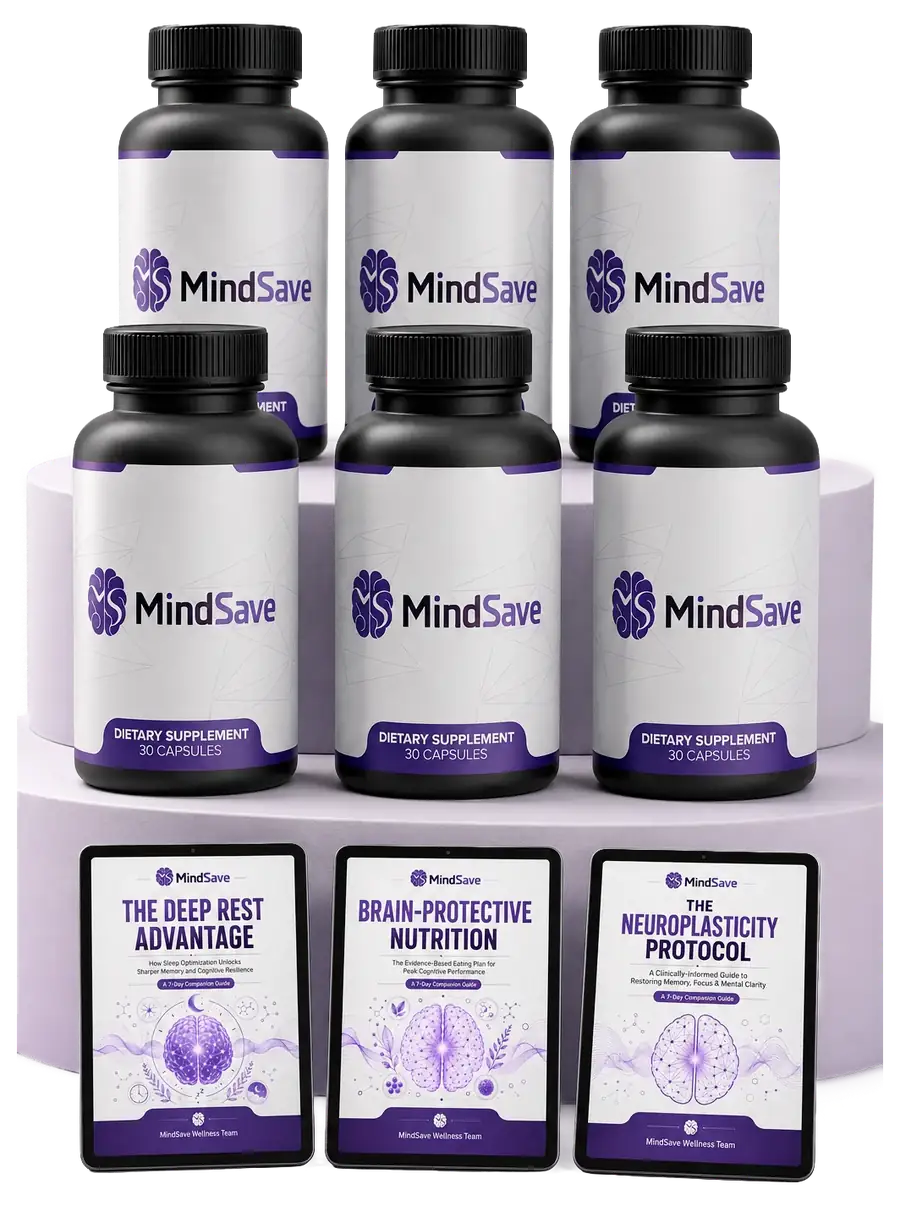
Order MindSave on the official website
Eight names published before the sale, every amount printed on the panel that arrives with the bottles, and sixty days to change your mind.
$49 to $79 a bottle · 60 days to change your mind
Order MindSave On The Official WebsiteFree US shipping on six bottles · 60-day money-back guarantee, empty bottles accepted · lot MIN-26/MI-7343