Many buyers plan to take a capsule for months, not weeks. That makes MindSave long term use a fair question. This guide says what the website prints, what it cannot say, and how to plan a sensible long run.
What does MindSave long term use mean here?
The seller says it plainly. For the best results, most people use MindSave consistently for at least 3 to 6 months, because nutritional and botanical nourishment works gradually. That is the long run the seller has in mind. It is ninety to a hundred and eighty days.
The label direction does not change over that time. It is one capsule a day with 6 to 8 oz of water, and the label artwork adds 20 to 30 minutes before a meal. There is no loading phase and no step up. The label asks you not to exceed the recommended dose, and that holds in month one and month six alike.
Is there a long-term safety study behind MindSave long term use?
No. MindSave as a finished product has never been the subject of a published clinical trial, so there is no study of the whole capsule taken over months. The research the website cites is on individual ingredients, at amounts those studies chose, and the sales page prints no amounts to compare against.
| Ingredient | What the website cites | Limit for long-term reading |
|---|---|---|
| Bacopa monnieri | Every trial in the systematic review ran twelve weeks. | Nothing longer is cited. |
| Huperzine A | The largest trial ran at least sixteen weeks, in people with Alzheimer's disease. | Not a healthy-adult study, and not about this capsule. |
| L-tyrosine | Studied mostly under short-term stress. | Not a study of everyday months-long use. |
| Vitamins B6 and niacin | Published upper intake levels. | Limits, not a study of this capsule. |
So the honest reading is that twelve weeks is the longest period any cited trial covers. Anything beyond it is outside what the website can point to. The seller's three to six months is advice about consistency, not a safety finding.
Which limits matter most over months?
Two of the eight names are vitamins with published upper limits. For adults the tolerable upper intake is 100 mg a day for vitamin B6, from food and supplements together, and 35 mg a day for supplemental niacin. Over a long run, small extras add up. If you also take a multivitamin or B-complex, place both panels side by side and add the B6 and niacin. Our guide to taking MindSave day to day has the routine.
Huperzine A matters more with time too. If you start a new medicine during a long run, especially an anticholinergic medicine or a cholinesterase inhibitor, the question changes. Tell your prescriber about MindSave and show the panel. The same goes for any new blood pressure treatment, since one published list carries caffeine.
How can you plan MindSave long term use sensibly?
Think in checkpoints, not in a single leap. A short plan keeps the decision in your hands.
- Day 1: write the purchase date down and read the panel on the bottle.
- Weeks 4 to 8: the band buyers on this website describe most often. Read your own notes.
- Day 50: decide on the capsules you have already taken. The guarantee closes at day 60.
- Week 12: the length of every bacopa trial. A fair point to judge again.
- Month 3 onward: if you continue, tell your doctor, and review your notes each month.
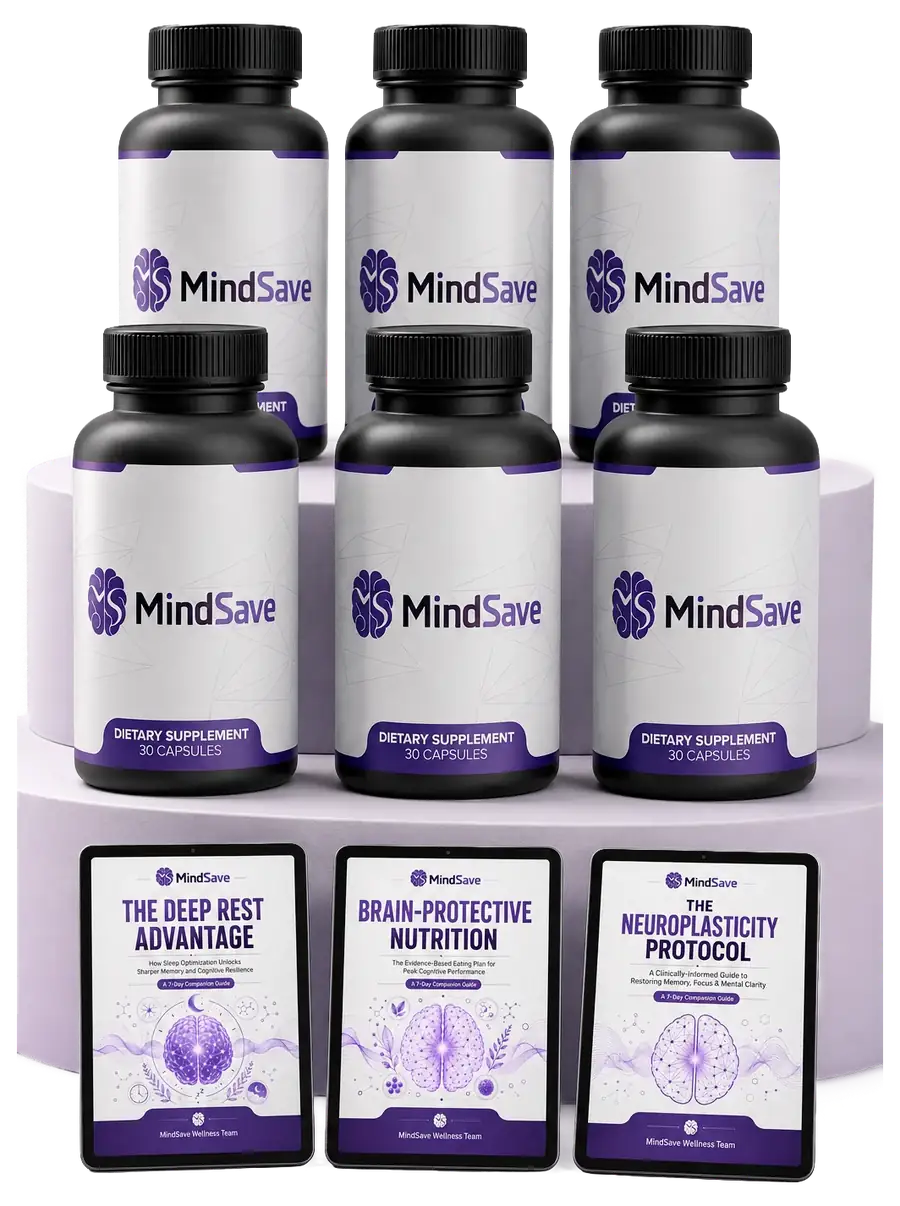
Pack choice follows from the plan. Two bottles is exactly sixty days. Three is ninety. Six is 180, which puts 120 days of capsules after the window has closed. Only buy a long run if you are happy to commit to it.
What should you tell your doctor about MindSave long term use?
Say that you plan to take a once-daily supplement for months. Bring the bottle and its Supplement Facts panel, the list of eight ingredient names, and your medicine list. Ask whether any name matters for your health, and ask whether regular check-ups should cover anything.
Be open about why you are taking it. MindSave is not a treatment for memory loss or any condition, and a change in memory or thinking that worries you is a reason for an assessment. Our post on MindSave safety covers the other cautions.
Frequently asked questions
Can you take MindSave every day?
Yes, daily is the direction: one capsule a day with 6 to 8 oz of water. How long a person can safely keep it up is not published for the finished capsule.
Is MindSave safe long term?
No long-term safety study of the finished capsule is published. Ask your doctor if you plan to take it for months.
How long should I take MindSave?
The seller advises at least 3 to 6 months of consistent use. The guarantee runs 60 days, and every bacopa trial cited ran twelve weeks.
What limits matter over time?
Vitamin B6 at 100 mg a day and supplemental niacin at 35 mg a day, counting other products you take.
Do I need a break from MindSave?
The website publishes no guidance on breaks. Ask your doctor or pharmacist.
What if I want to stop?
Stop whenever you choose. If you are inside the 60-day window you can return the bottles, empty ones included.
Our view
MindSave long term use is a plan the seller recommends and a question the evidence cannot answer. The routine is easy to keep up, but no study of the finished capsule covers months.
So go in step by step. Use the checkpoints, keep a short record and keep your doctor informed. We earn when you buy, so weigh this guide with that in mind. It is general information, not medical advice.
What this is and is not. MindSave is a dietary supplement, not a drug. It is not FDA approved, and no supplement is. It is not intended to diagnose, treat, cure or prevent any disease, and nothing in this article says it is a treatment for dementia, Alzheimer’s disease or mild cognitive impairment. Memory or thinking that changes in a way that worries you is a reason to see a doctor, not a reason to start a capsule. Talk to your doctor or pharmacist before use, above all if you take prescription medicine.
Last updated November 4, 2026
Sources named on this page
- NIH Office of Dietary Supplements. Vitamin B6: Fact Sheet for Health Professionals. https://ods.od.nih.gov/factsheets/VitaminB6-HealthProfessional/
- NIH Office of Dietary Supplements. Niacin: Fact Sheet for Health Professionals. https://ods.od.nih.gov/factsheets/Niacin-HealthProfessional/
- MedlinePlus, U.S. National Library of Medicine. Dietary Supplements. https://medlineplus.gov/dietarysupplements.html